St. Patrick’s Day: From Snakes to Shenanigans
Once a religious feast day, now… a global excuse to wear green, drink boldly, and make questionable decisions.
Welcome to St. Patrick’s Day—where history, culture, and chaos collide in the most entertaining way possible.
The story behind St Patrick’s Day history and celebrations is far more interesting than most people realise.
A Quick (and Slightly Less Boring) History
St. Patrick’s Day celebrates Saint Patrick, the patron saint of Ireland, who lived during the 5th century.
Legend says he:
- Brought Christianity to Ireland
- Used the shamrock to explain the Holy Trinity
- And—most famously—“drove the snakes out of Ireland”
Historians say there probably weren’t any snakes to begin with… but honestly, it’s a much better story this way.

Understanding St Patrick’s Day history and celebrations helps explain how a quiet religious observance became a worldwide phenomenon.
Originally, March 17th was a religious feast day marked by church services and quiet reflection.
Fast forward a few centuries, and it has somehow evolved into:
🍀 Green rivers
🍀 All-day drinking
🍀 Grown adults dressed as tiny mythical men
Progress, of a sort.
How It Became a Global Party
Ironically, the biggest St. Patrick’s Day celebrations didn’t even start in Ireland.
Irish immigrants—especially in places like the United States—played a huge role in shaping modern St Patrick’s Day celebrations. Cities began hosting parades, and the tradition quickly spread worldwide.
Today, you’ll find celebrations everywhere from:
- Dublin
- New York
- Sydney
- Your local pub that suddenly has 12 shamrock decorations
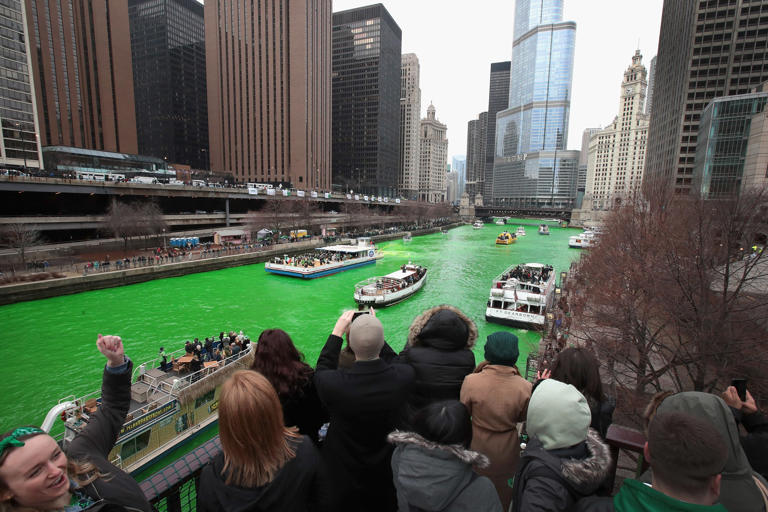
Even landmarks join in. The Chicago River gets dyed bright green every year—because nothing says “heritage” like temporarily changing the colour of a river.
Modern Celebrations: Slightly Less Spiritual
Let’s be honest. For many people, St. Patrick’s Day now includes:
- Wearing green to avoid getting “pinched”
- Drinking something that probably shouldn’t be green
- Attempting an Irish accent (poorly)
- Singing songs you only half know

Pubs open early. Very early. Suspiciously early.
By midday, someone is already declaring:
“This is the best St. Patrick’s Day ever!”
By evening, that same person is texting apologies.
The Great Irish Identity Boom
Every year, millions suddenly rediscover their Irish heritage.

“I’m basically Irish,” says someone whose connection is:
- A distant relative
- A holiday once taken to Dublin
- Or just a strong emotional bond with Guinness
For 24 hours, the world becomes one big Irish family—whether Ireland asked for it or not!
Leprechauns, Legends, and Loud Decisions
No celebration would be complete without leprechauns—those tiny mythical figures who guard pots of gold and apparently inspire full-grown adults to dress like them.
Common sightings include:
- Bright green suits
- Oversized hats
- Beards that look… questionable at best

Somewhere, a real Irish person is quietly shaking their head.
Food, Drink… and Questionable Choices
Traditional Irish foods like stew and soda bread still make an appearance.
However, they now share the spotlight with:
- Green burgers
- Green beer
- Green everything

At this point, if it’s not green, is it even St. Patrick’s Day?
The Day After: A Universal Experience
March 18th is when reality returns.

Symptoms may include:
- A mysterious headache
- Regret over text messages sent
- Photos you don’t remember taking
- A deep desire to never see the colour green again
Experts call this “The Aftermath.”
Final Thoughts
St. Patrick’s Day has come a long way—from a quiet religious observance to a worldwide celebration of Irish culture, community, and controlled chaos.
And somehow, it still works.
So whether you’re celebrating in Dublin or your living room:
Wear green. Raise a glass. Make memories (or at least partial ones).
Because one thing is certain:
Irish today. Hungover tomorrow. 🍻

Share this content:





Post Comment
You must be logged in to post a comment.